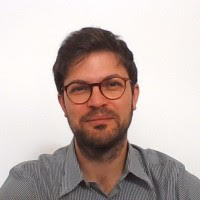
He’s a psychologist with advanced training in psychotherapy (SSSPC/Rome) and has a PhD in Educational Sciences (UPS/Rome), with a thesis entitled “Job insecurity and Future Perspective”.
In psychotherapy, he follows an integrative approach, with emphasis on Transactional Analysis, both classical and contemporary.
He’s a member of the OPP (Ordem dos Psicólogos Portugueses), the OPL (Ordine degli Psicologi del Lazio), the IRPIR (Istituto di Ricerca sui Processi Intrapsichici e Relazionali), the EATA (European Association for Transactional Analysis) and the EFPA (European Federation of Psychologists Associations). He is also co-founder of Psychikós Clinic.
His first professional experiences as a Mental Health Technician took place in Rome in Social Cooperatives, providing services at home, in Autonomization Apartments with part-time or full-time coverage, Therapeutic Communities and Day Centres. In these various contexts, he worked with adolescents, young adults and adults (2009-2016). In Portugal, he has worked as a psychotherapist (individual, group and multi-family) and as Research Coordinator at Casa de Alba Therapeutic Community (2020-2022).
In private practice, he worked as a psychotherapist in Rome from 2012 to 2016, an activity he has continued in Lisbon until now (Psychikós Clinic).
He has combined this work as a Mental Health Technician and Psychotherapist with other activities of shorter duration: addressing, as Guest Professor, the mental health crisis in today’s modern society (UPS/Rome); training students and teachers in educational institutions (Liceo Pacinotti-Archimede/Rome, Salesianos de Manique/Alcabideche and SwingStation/Lisbon); protecting and promoting mental health at work (Workwell/Lisbon); getting involved in research (UPWEB/Lisbon) and social inclusion projects (ESAO/São Vicente de Cabo Verde and Salesianos de Manique/Alcabideche).
He emphasizes the importance of psychotherapy as a tool for empowerment and autonomy. Furthermore, in systemic terms, it places individual problems in their respective social and cultural contexts.